


Someone in 17th century Poland really did not want one particular girl rising from the dead.
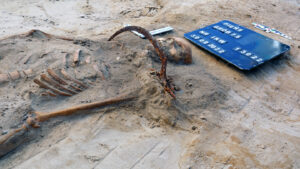
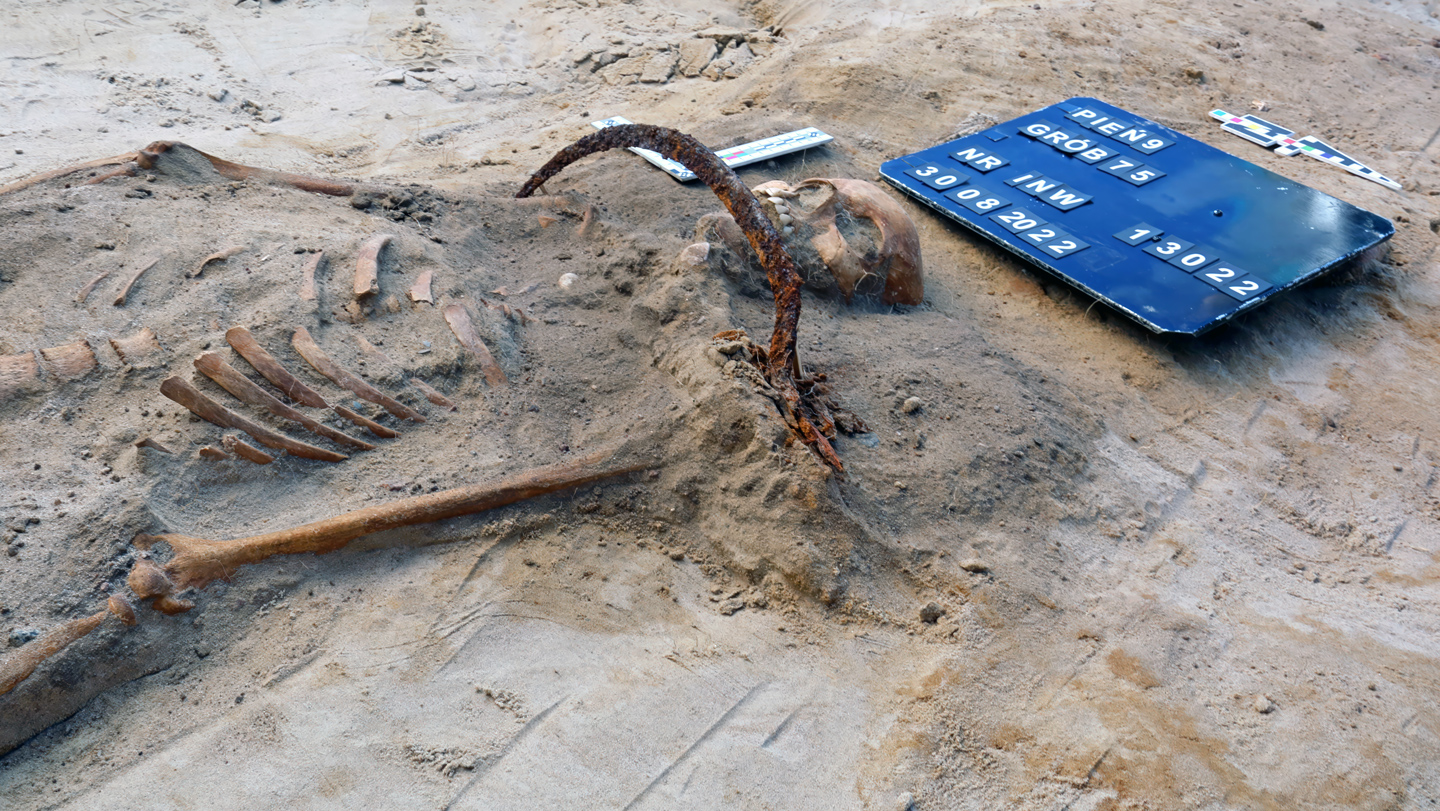
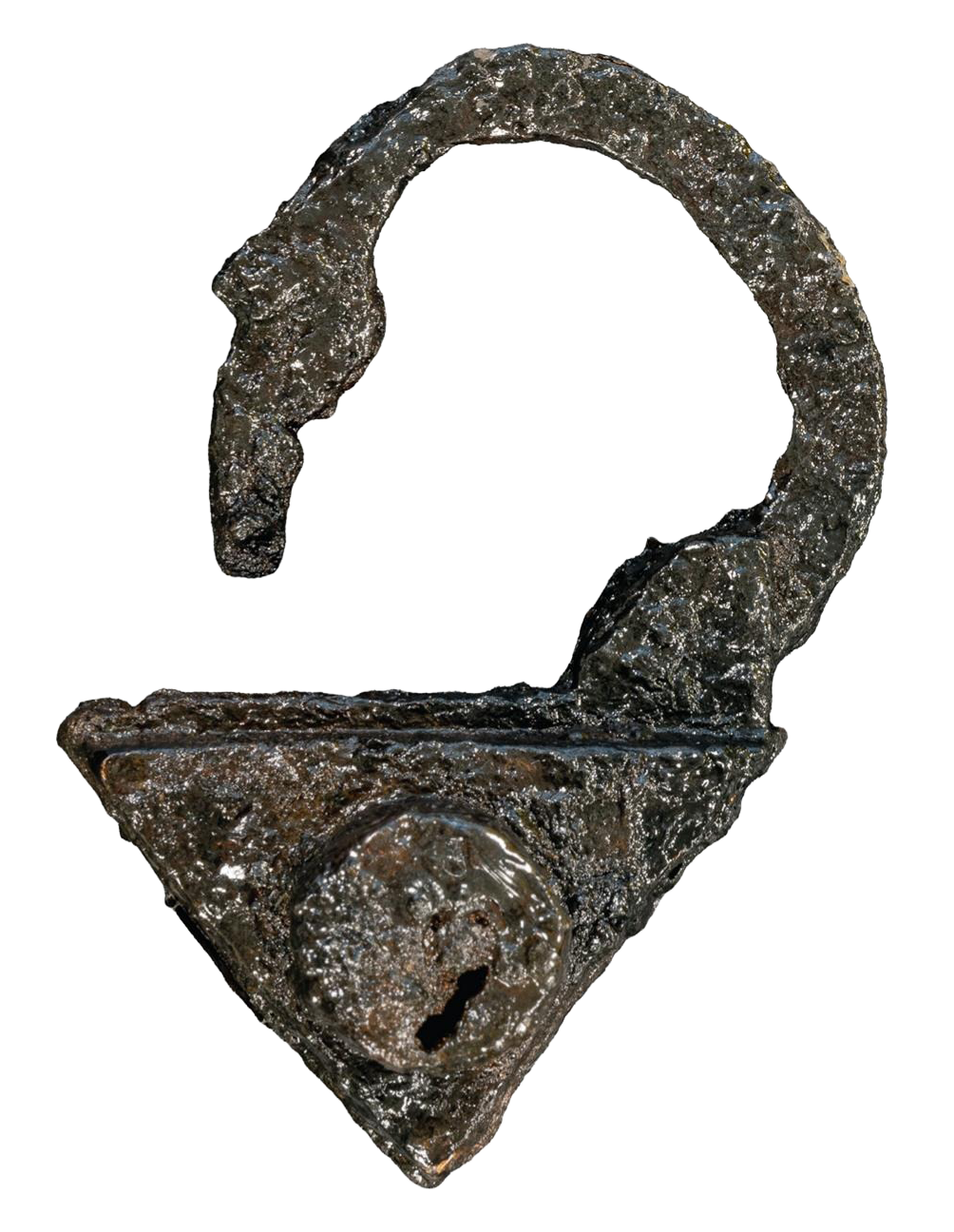
In 2022, archaeologists unearthed an unsettling grave in a cemetery in Pień, north-central Poland. A young woman had been buried with the handle of a sickle driven into the dirt beside her neck so that its serrated blade hooked over her throat. The woman, who the researchers call Zosia, also wore a triangular padlock on the big toe of her left foot.
“The placement of the sickle and the padlock suggests that the purpose of these practices was to protect the living from Zosia after her death, including, without a doubt, preventing her from rising from the grave,” says Dariusz Poliński, an archaeologist at Nicolaus Copernicus University in Toruń, Poland.
Poliński and his colleagues did a sweeping set of analyses on Zosia’s grave to piece together details of her life and burial. The team first reviewed other post-medieval European tombs where sickles and padlocks had been found and historical beliefs about such items. Both types of artifacts appear to have been used to shield the living from the dead, the researchers report in the October Journal of Archaeological Science: Reports. But Zosia’s grave is the first discovered with both revenant prevention measures.
Zosia’s skeleton suggests she was 17 to 19 years old when she died. Based on the arrangement of her leg bones, the padlock was likely affixed to her toe when she was originally interred — hinting that someone immediately clocked Zosia as a flight risk from the afterlife. But mixed-up soil and the odd angle of Zosia’s left arm also give the impression that her tomb was later dug up, probably to place the sickle over her throat as extra anti-resurrection protection, the researchers write.
A close look at Zosia’s skull also revealed greenish stains that could have come from some copper object — or objects — being shoved in her mouth or nose. “This may have constituted an additional protective measure against the deceased,” Poliński says. In Polish folklore, copper was thought to help ward off vampiric demons, or strzygi.
“I have seen weird. I don’t know if [I’ve seen] weirder,” says Lauren Hosek, a bioarchaeologist at the University of Colorado Boulder, who has studied unusual graves but was not involved in this research. “Sickle across the neck is pretty crazy,” she says. That, paired with the padlock as a restraint, “is a pretty good argument for this idea of fear of the dead.”
Graves designed to fend off specters are sometimes known as “anti-vampiric.” But that doesn’t necessarily mean that people in the 17th century thought Zosia was out for blood, Hosek cautions. “Our modern connotations for vampire are very specific, with garlic and bats and capes.” In this historical context, a vampire simply refers to some sort of malevolent undead being.
To explain how Zosia earned this anti-vampiric treatment, Poliński’s team ran chemical analyses on her skeleton and burial accessories. The isotopes of strontium and oxygen in her teeth suggest that she grew up near Pień. But Zosia’s DNA shows that her mother’s family might have come from Scandinavia. And remnants of a silk cap on Zosia’s head contained threads of pure silver and gold. She must have been a wealthy woman of high social status, the researchers suspect, to be laid to rest in such luxury attire.
With such rich context about Zosia’s life, “we can rule out some commonly suggested explanations for this kind of mortuary treatment,” says Sandra Garvie-Lok, a bioarchaeologist at the University of Alberta in Edmonton, Canada, who has also studied peculiar graves but wasn’t involved in this work. Historical records have shown that someone might be singled out for strange burial because they had been an outsider or lived a difficult life, Garvie-Lok notes. But if Zosia was a noblewoman who grew up near Pień, she may not neatly tick either of those boxes.
Particularly violent or strange circumstances around her death might account for her unconventional burial. But there are no obvious marks of injury or illness on her skeleton. “We’re still looking at the DNA” for clues about how she died, says study coauthor Tomasz Grzybowski, a forensic geneticist at Nicolaus Copernicus University.
The Pień cemetery is riddled with other creepy burials, too. One boy in the graveyard, for instance, was buried face down with a triangular padlock on his right foot. “Sometime later, the grave was reopened and most of his remains were removed,” Poliński says, “leaving only the lower legs and feet in place, together with the padlock.”
Even spookier: There are no written references to the graveyard. It doesn’t appear on any maps. And because it was set away from the village, it may have been on unconsecrated ground far from any church or chapel. All this points to the cemetery being specifically for people who’d been rejected by society and were feared after their deaths.
If so, Garvie-Lok says, “this would make Pień a very unusual site that we could learn a lot from.”
Read the full article here