



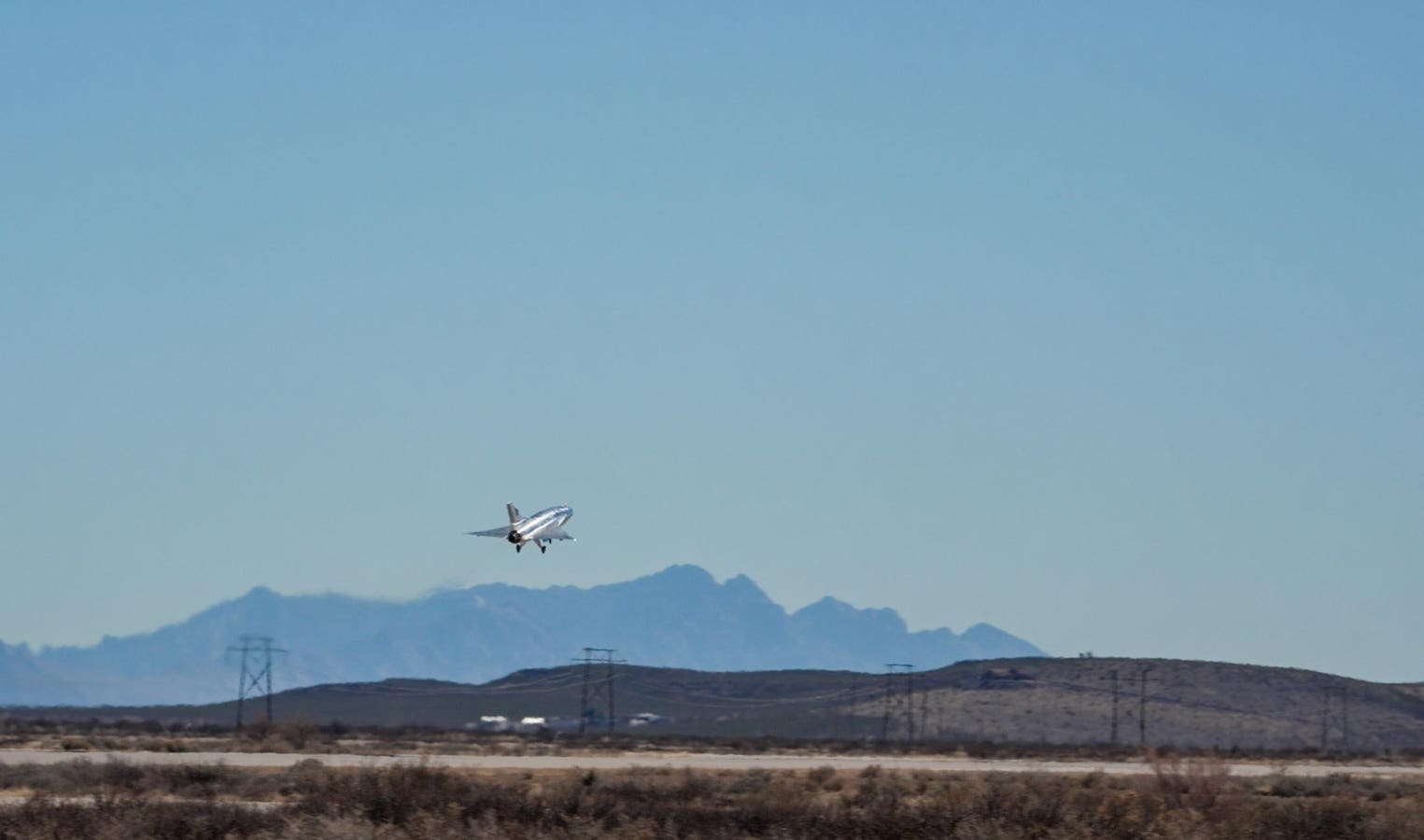
Last Wednesday, a defense aviation company backed by Sam Altman, Peter Thiel and Thiel’s Founders Fund successfully tested an uncrewed airplane at supersonic speed, the first privately developed jet in the world to do so. The seven-year-old company, Hermeus, announced on Tuesday that it had flown its “Quarterhorse”—the name for its experimental aircraft—over a New Mexico military base at 1.21 times the speed of sound, or roughly 930 miles per hour.
It marked a crucial step towards the El Segundo, California-based unicorn’s goal of achieving hypersonic flight, over five times the speed of sound. No airplane operating today can reach that speed.
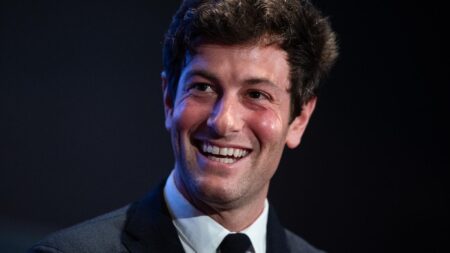
“Supersonic flight is a huge milestone that is going to be a massive tailwind to us, I believe,” says Zach Shore, who started transitioning into Hermeus’ CEO role the week before the Quarterhorse test flight, taking over from company cofounder AJ Piplica. Piplica remains as board chairman; cofounder Skyler Shuford has an observer seat and two additional cofounders are no longer with the firm.
“The reason it mattered,” says Shore of the test flight, “was I needed to show that my airplane was stable through the transonic [speed range],” which lies just below supersonic. “We did that. Boom. Great. That’s a huge risk off the table. Now I know my airplane’s stable.”
Next comes Mach 2, or twice the speed of sound, which the company hopes to hit this year. Mach 3 would then follow in the first half of 2027, says Shore. The hypersonic capability is still at least several years out.
The United States already has missiles that fly at hypersonic speeds, and a few experimental programs since the 1960s have demonstrated that planes are capable of the same. But the U.S. military is now eager for an operational fleet of such vehicles, particularly as China and Russia invest heavily in their own hypersonic programs and race ahead of the U.S. in some weapons systems.
That’s in part why the Pentagon has already awarded several contracts to Hermeus, including a $60 million award in 2021 to continue developing and test the Quarterhorse. The White House is also watching the jet’s progress; its Office of Science and Technology Policy shared an X post about the supersonic milestone on Tuesday.
“America is at the threshold of a bold new chapter in aerospace innovation,” the office wrote. “Today, faster, quieter, safer and more efficient air travel is on the horizon.” The statement caught the eye of platform owner Elon Musk, who replied with a simple commendation: “Cool.” OpenAI’s CEO Sam Altman also shared Hermeus’ announcement.
Altman first invested in Hermeus in May 2022 when he led the company’s $100 million Series B funding round. Thiel also participated in the raise, both as an individual and through his venture capital firm Founders Fund. Neither Altman nor Thiel have disclosed how much they’ve invested. Founders Fund invested again in a $350 million Series C round this April that valued Hermeus at $1 billion.
Altman happens to be hedging his supersonic bets. He’s invested twice in Hermeus competitor Boom Technology (valued at $1.5 billion as of a December funding round), whose XB-1 aircraft completed its first successful supersonic test in January of 2025. The key difference between that flight and this new one by Hermeus is that the former had a human pilot. Boom’s goal is to bring back supersonic commercial air travel, a capability the world lost with the retirement of the Anglo-French airliner Concorde in 2003.
Hermeus similarly started out with commercial ambitions, but over the past few years has pivoted to focus on defense, where the U.S. military is already a keen customer and the business case is easier to make (supersonic flight is preposterously expensive; the Concorde transatlantic flights used one ton of fuel per seat, per the Smithsonian, which is roughly seven to nine times more than modern aircraft, according to a HAW Hamburg study). If Hermeus achieves hypersonic speed, its plane will fly at least twice as fast as the F-15 Eagle, the quickest fighter jet the U.S. military uses today, not to mention 2.5 times faster than the Concorde. Hermeus still hopes its planes could one day be used for commercial travel—but only after it builds a successful defense business.
The potential uses for a hypersonic military plane are manifold: Surprise attacks. Faster responses to being attacked. Easier evasion of interceptors. Better intelligence gathering. The benefits would be still greater for an aircraft that is uncrewed and relatively cheap, as Hermeus promises its will be, thanks in part to using preexisting (modified) engines rather than designing them from scratch. According to Shore, it will ultimately cost about half as much as an F-15 fighter jet, the new variant of which is roughly $100 million. The lower price tag would mean the Quarterhorses are more disposable, so the military could acquire a number of them and overwhelm an enemy position without as much fear of losing some in the process.
Shore points to Air Force Chief of Staff Kenneth S. Wilsbach’s congressional testimony last week as evidence that the government needs new technological solutions. At the hearing, Wilsbach stated that the military intends to buy more MQ-9 drones—whose uncrewed capabilities have made them the “most valuable player” in the Iran war—as well as next-generation F-15s, which have also been used in Iran and are the only fighter jets able to carry the U.S.’s biggest weapons. But, as Shore points out, the U.S. has been using those assets for about 20 years and 50 years, respectively.
“You’re buying two different airplanes that are both outdated to solve problems that are overlapping,” says Shore. “Our plane can carry all the things that the F-15 can carry and have no people on board. Even before you start talking about going Mach 3.”
As for how the CEO transition is going so far, Shore is riding high: “I mean, it’s nice when your plane can go supersonic!” he says, laughing. “It’s a great way to start.”
Read the full article here