




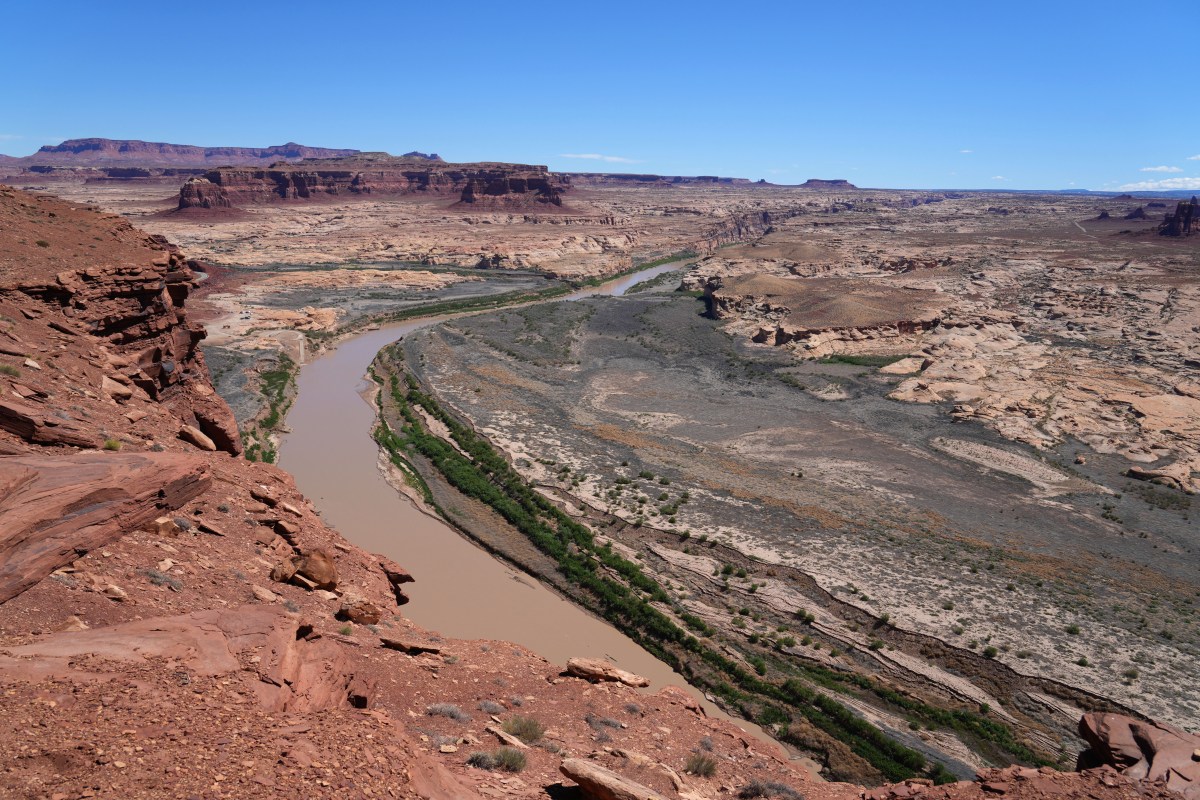
Three southwestern states that rely on the Colorado River are proposing a plan to reduce water consumption over the next two years as water levels in key reservoirs remain near historic lows.
Arizona, California and Nevada have submitted a proposal to federal officials that would significantly increase water conservation as a stopgap measure while negotiations continue between the seven states that share the river.
The Colorado River system, anchored by reservoirs Lake Mead and Lake Powell, is a critical water source for about 40 million people across the western United States. Years of drought, combined with a dry winter and below-average snowpack in the Rocky Mountains, have contributed to historically low reservoir levels, with the two sitting at about one-third of capacity.
Officials warn that without additional conservation, the reservoirs could reach levels where they can no longer produce electricity or reliably deliver water downstream.
“We have kind of a crisis situation that this past winter has created,” Arizona Water Resources Director Tom Buschatzke said, per The Arizona Republic. “We need to do everything we can—and that’s what our plan does—to find a short-term fix.”
What To Know
The plan proposed by Arizona, California and Nevada would see the three states collectively reduce their water use by up to an additional 1 million acre-feet annually through 2028.
This would be in addition to 1.5 million acre-feet in cuts previously proposed among the three U.S. states and Mexico.
The plan would involve immediate cuts of about 700,000 acre-feet per year split between the three states. It also includes the potential for an additional 300,000 acre-feet in voluntary reductions funded through federal drought-response money under the 2022 Inflation Reduction Act.
Buschatzke said the proposal was developed in coordination with the U.S. Bureau of Reclamation and is intended to keep water levels in Lake Mead and Lake Powell above critical thresholds in the short term.
Without such measures, water managers have warned that parts of the system could face severe constraints, including reduced flows through the Central Arizona Project canal, which supplies Phoenix and Tucson.
Arizona Governor Katie Hobbs said in a statement that the proposal avoids potential federally imposed cuts to Arizona’s Colorado River water supply and keeps control over water management in the hands of the states.
“With this Lower Basin Proposal, we are protecting Arizonans from devastating cuts being forced on us by the federal government, and ensuring our families, farmers, and businesses have the water they need to thrive,” she said.
Basin States’ Negotiations Break Down
While the states and the federal government seek a 20-year operating plan to provide long-term certainty, negotiations among the seven basin states have stalled.
The four Upper Basin states—Wyoming, Utah, Colorado and New Mexico—contend that the Lower Basin must resolve the shortage as the region’s largest consumers of water.
Conversely, the Lower Basin states—Arizona, California and Nevada—have offered to cut their use, but they maintain that a sustainable solution requires firm conservation commitments from the Upper Basin states.
The two-year plan is intended to serve as a stopgap measure while states continue negotiating a replacement for the current shortage guidelines, which are set to expire in October.
Without a consensus, federal officials or the courts may intervene to determine water allocations, which could result in lengthy litigation.
What Happens Next
The U.S. Bureau of Reclamation is reviewing the Lower Basin states’ proposal as part of its broader post-2026 planning process, with a draft plan expected by mid-June and a final decision by mid-July.
Buschatzke said talks between the seven states about a long-term solution are likely to resume in the coming weeks.
Read the full article here