


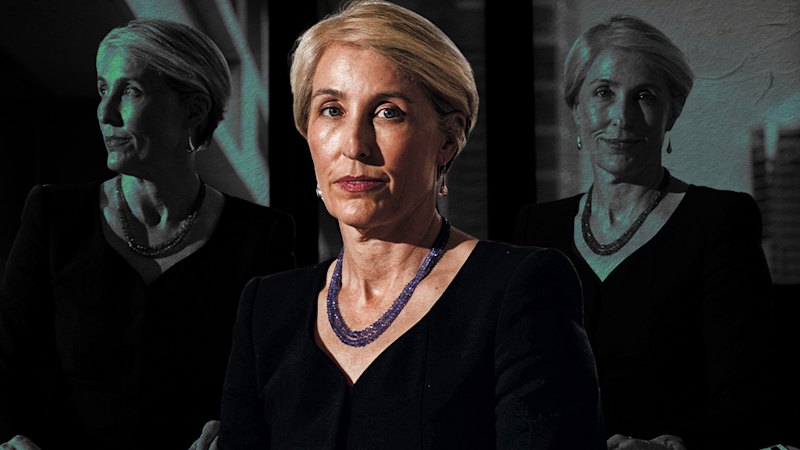
The messy saga involving a parliamentary committee’s interrogation of Director of Public Prosecutions Sally Dowling, SC, came to a head this week, when the committee’s final report accused Dowling of giving false evidence to parliament.
It was a gravely serious finding, made by a 4-3 majority of the inquiry, and it was swiftly dismissed by Attorney-General Michael Daley, who described the inquiry as a “stitch-up”.
Three MPs delivered strongly worded dissents. Such disagreement is not uncommon in committees, which are often political and divided along party lines. Two Coalition MPs, one Labor MP and a Shooters, Fishers and Farmers Party MP accused Dowling of misleading parliament, while two Labor and one Greens MP disagreed.
This split was unusual, though, in that Labor’s Stephen Lawrence, a Sydney barrister, lined up alongside the Coalition committee members.
The majority found Dowling’s conduct to be so serious that they called for a new parliamentary oversight committee for the independent Office of the Director of Public Prosecutions (ODPP), a highly controversial idea that has been dismissed in the past because it would politicise an office that should never be politicised.
They also suggested that Daley consider establishing a formal inquiry with compulsory powers to determine whether there were grounds to remove Dowling from office.
Criticism of the ODPP’s decisions has been swirling for years, since some judges, including District Court Judge Penelope Wass, warned that the office was prosecuting unmeritorious sexual assault cases.
Dowling’s critics believed she was retaliating against Wass when a story was pitched to 2GB about Wass inviting a juvenile offender to perform what she called a “Welcome to Country” before his sentencing. He instead performed an Acknowledgement of Country via video link.
The story was later revealed to have been given to 2GB by an ODPP media manager, who told parliament she believed at the time that she had authorisation to do so.
It would be poor conduct indeed, if the DPP authorised the planting of a negative story about a sitting judge in the media. Dowling told parliament she did not, and that in the meeting at which the matter was discussed, she was distracted while attending to other matters on her phone.
The parliamentary committee was ostensibly established to examine identity protections for court proceedings involving children, but focused on a single case study; the naming of the juvenile in background information given by the ODPP to 2GB. He was not named on air.
Dowling’s supporters argued this was an outrageous weaponisation of a parliamentary committee. Her critics argue that, if she did authorise the story in retaliation, it would be an egregious attack on a judge.
When the committee’s report arrived on Tuesday, the people of NSW were no closer to clarity. Her detractors still believe she authorised the story and gave false evidence. Her supporters still think the committee is a witch-hunt, and that any evidence she agreed to the story “is staggeringly absent”.
This unedifying battle is undermining the dignity of parliament, the courts and the ODPP.
This politically charged debate must not result in parliamentary oversight of the ODPP. There is room for a sober discussion about independent oversight of the state’s prosecuting agency, but any oversight would need to involve hallowed legal minds, not politicians. This committee is evidence enough of how politicised parliamentary processes can become.
It is an essential foundation of democracy that politics be kept well away from the justice system.
Jordan Baker sends an exclusive newsletter to subscribers each week. Sign up to receive her Note from the Editor.
 The Herald’s View – Since the Herald was first published in 1831, the editorial team has believed it important to express a considered view on the issues of the day for readers, always putting the public interest first.
From our partners
Read the full article here