



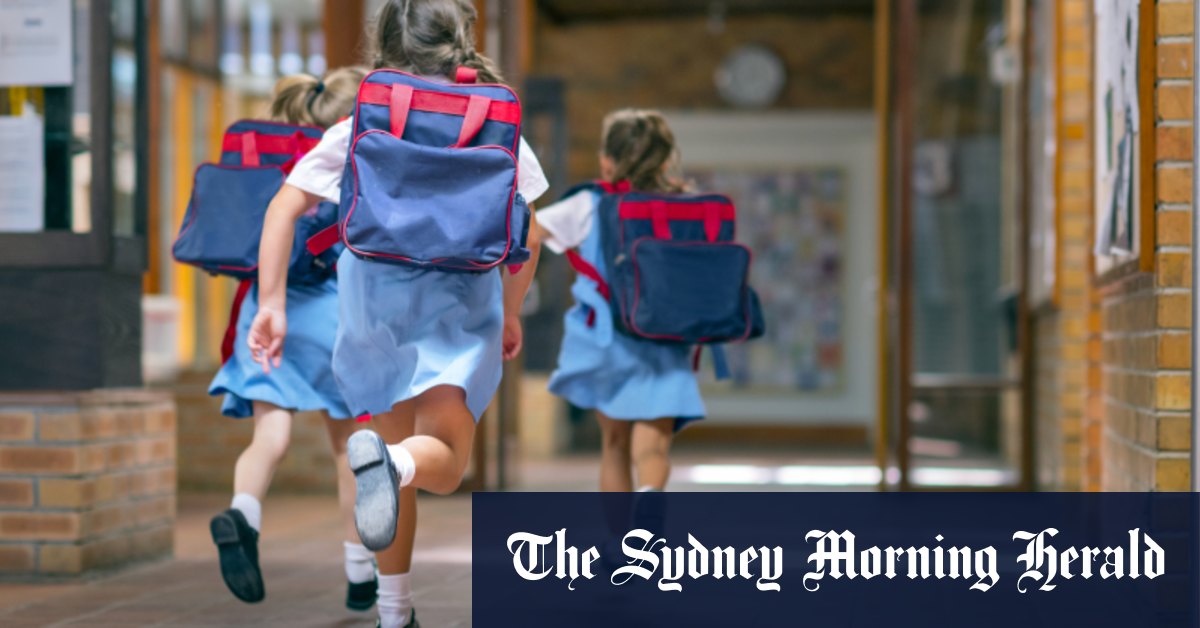
The pupil-free days are in addition to Victoria’s public holidays, four of which – Labour Day, ANZAC Day, King’s Birthday and Melbourne Cup – fall within term time next year.
Loading
The union will begin developing its log of claims within months and will present them to the government by mid-year when negotiations formally start.
“We’ve had claims in previous agreements around increased numbers of pupil-free-days, and the government has always rejected that,” Peace said.
Instead, the current Victorian Government Schools Agreement granted teachers a reduction of 90 minutes of face-to-face time each week to be used for preparation and planning and time-in-lieu for parent-teacher interviews, camps and information nights.
But Peace said the unpaid work being done remained “a significant problem” and needed to be addressed.
She said principals did an average of 12.5 hours a week of unpaid work, while for teachers it was about 60 hours – much of that involving compliance and administration work.
Parents Victoria chief executive Gail McHardy said if Victoria was to follow NSW and increase the number of pupil-free days in a future bargaining agreement, parents would need to be clear on why there had been a change.
“If it’s clear that it’s being increased to assist workforce issues and families will be given advance notice … that would be a positive step,” she said.
Among parents’ main gripes surrounding schools’ pupil-free days are poor communication and a lack of advance warning.
McHardy said schools needed to show respect to families and give them notice to enable them to plan for a change in routine.
Parents with multiple children at a number of schools faced the added challenge of juggling different pupil-free days, she said.
“The challenge increases if the pupil-free days are different. So where school networks can collaborate, that’s helpful.”
La Trobe University dean of education Professor Joanna Barbousas said pupil-free days served a purpose as schools were keen to adopt new practices, but teachers needed time to prepare before entering the classroom.
“Pupil-free days give schools time to retrain and understand new teaching methodologies, sharing knowledge and best practice with those that have already made the transition,” she said.
Barbousas acknowledged that accountability was important when it came to how the days were used.
A state government spokesperson pointed to the $10.7 million it allocated to reduce the time that school staff spend on administration, including support for teachers in curriculum and assessment planning.
The spokesperson said that schools could use the pupil-free days to prepare for the introduction of phonics into the prep to grade 2 curriculum next year and that teachers would be provided with a set of ready-to-use resources to help the transition.
“Victoria is home to some of the most talented teachers in the nation, and we’re backing them with the resources they need,” the spokesperson said.
Read the full article here