


And there’s a more fundamental problem: there’s no room.
Built with only six lanes
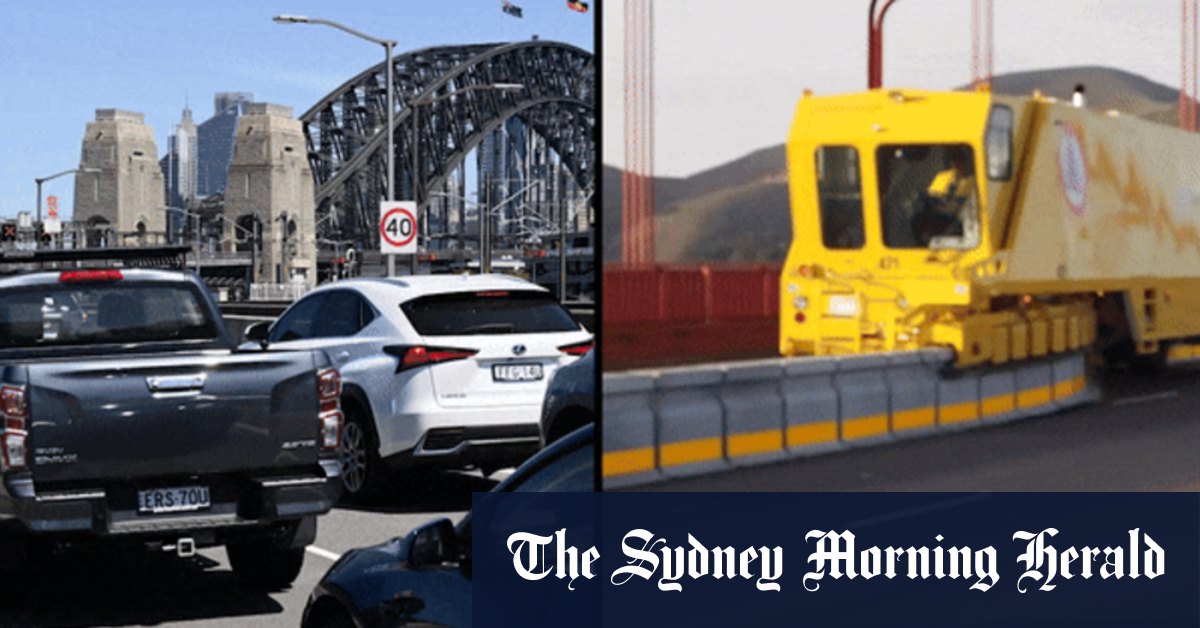
The Sydney Harbour Bridge was built in 1932 with only six lanes of traffic. Now there are eight.
The first cars, trains and bikes cross the Sydney Harbour Bridge in 1932, with no lane markings. Credit: Mitchell Library, State Library of New South Wales
Designer John Bradfield planned the structure with two railway tracks on each side: trains travelling on the bridge’s western side would serve the North Shore line, while the those on the east would be part of a never-to-eventuate Northern Beaches rail line. When that line was ditched, trams moved across the bridge, before they too were removed in 1958.
Loading
But fitting in so many cars on the bridge means narrow lanes: those in the middle of it are among the state’s narrowest, some just 2.92 metres wide. That leaves transport planners with little flexibility to insert barriers between the lanes.
“A zipper means they would have to be narrowed a little further than that,” Clifton said.
“It sounds very callous, but we have to balance getting people to work as quickly as possible, versus safety, versus everything else the government needs to do.”
“Transport planners have to make that decision every day. There is a value of life that’s been used to say, ‘If we make this change, we’ll save this many lives, but at this cost.’ That’s money that could be put into the health system that saves lives as well.”
Read the full article here