



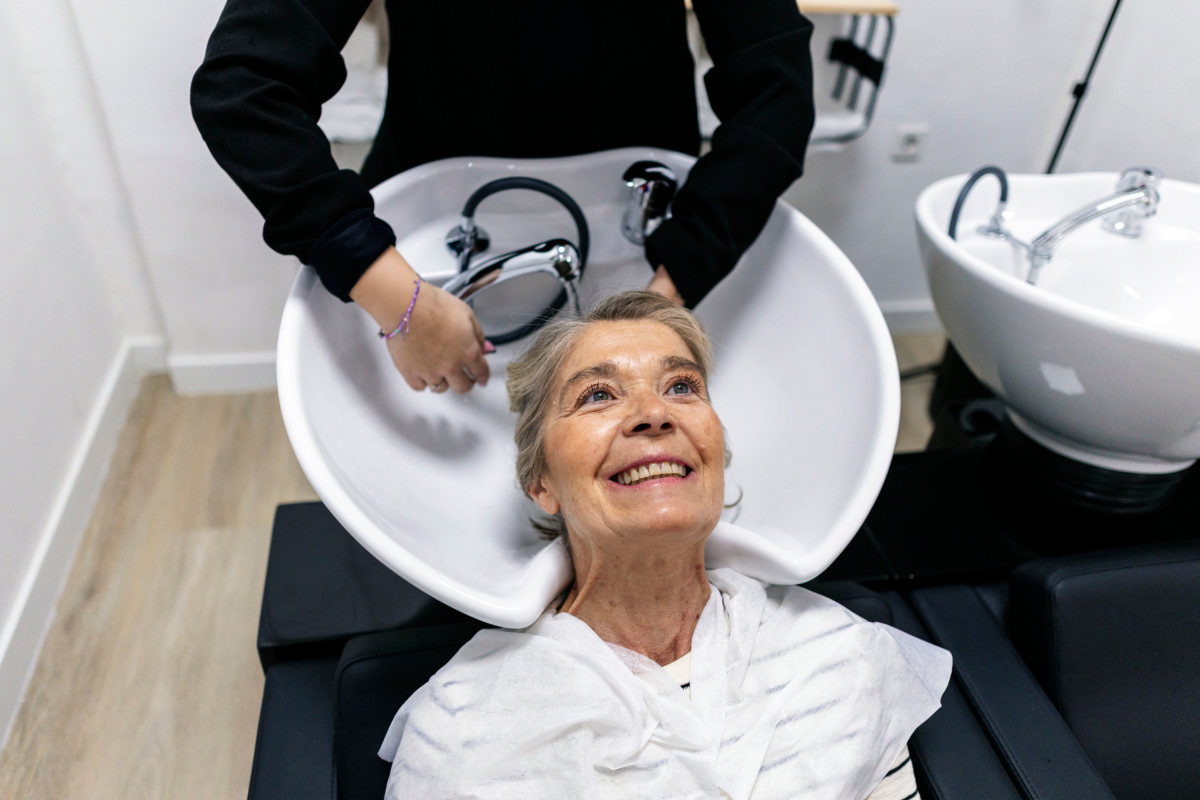
Sticking with the same hair‑washing routine for decades may feel intuitive — but experts say it’s one of the most common mistakes people make as they age. That’s because both the scalp and the hair itself undergo significant physical changes over time, affecting everything from oil production to strength and sensitivity.
“As we age, the scalp and hair undergo fundamental biological changes,” Dr. Alan Bauman, founder of Bauman Medical, a hair restoration practice, told Newsweek. “Keeping the same routine for decades is one of the most common — and overlooked — mistakes.”
Why The Aging Scalp Behaves Differently
In early adulthood, the scalp typically produces higher levels of sebum, the natural oil that helps protect both the scalp and hair shaft. During this stage, more frequent washing can help maintain balance. But that equation shifts with age.
“Sebum output peaks in our late teens and twenties and then steadily declines,” explained Dr. Sharleen St. Surin‑Lord, a board‑certified dermatologist and founder of DermHairDoc, told Newsweek. As oil production falls, the scalp becomes drier, more sensitive, and less resilient.
Sebum also plays a crucial biological role beyond lubrication. It helps preserve the scalp’s barrier, supports the microbiome, and protects against moisture loss. “When sebum production falls, trans‑epidermal water loss increases,” St. Surin‑Lord said. The result, she noted, is a scalp that is slower to recover from irritation caused by harsh shampoos, friction, or environmental stress.
Dermatologist Dr. Kimberly Salkey of VCU Health told Newsweek this shift explains why many people naturally find they don’t need to wash as often as they age. “Aging skin does not retain moisture as well. This shows up in the form of dry skin but also dry scalp and hair,” she said, adding that decreased oil production can make previously tolerated styling products suddenly irritating.
How Hair Texture and Strength Change Over Time
Hair strands themselves also change with age. Individual fibers often become finer, weaker, and more prone to breakage. The cuticle — the outer protective layer — becomes more fragile, making hair less tolerant of aggressive washing and heat styling.
“With time, there are significant changes in the hair follicle that translate into changes in the hair shaft,” St. Surin‑Lord explained. As the growth phase shortens and the resting phase lengthens, overall density gradually declines. Many follicles begin to miniaturize, producing thinner hair before stopping altogether, a process seen in male and female pattern hair loss.
Celebrity hairstylist Jay Small shared with Newsweek that hormonal shifts, oxidative stress, and nutrient absorption all affect what he calls the “follicle factory.” As estrogen declines, particularly during perimenopause and menopause, follicles can shrink under increased sensitivity to DHT, a hormone linked to thinning and texture changes.
Should You Wash Your Hair Less With Age?
Generally speaking, experts agree that the frequency with which shampoo is used often decreases with age.
“In a 25‑year‑old with robust sebum production, daily shampooing is often appropriate,” St. Surin‑Lord said. “In a 55‑year‑old, daily shampooing with a conventional surfactant formula creates a chronic cycle of barrier disruption.”
Dr. Bauman said the focus should shift from aggressive cleansing to maintaining scalp health. While daily washing may make sense for oilier scalps earlier in life, mature scalps often do better washing every two to three days, or even less, depending on hair type and lifestyle.
That said, VCU’s Salkey cautioned against extremes. “The scalp is skin, like the rest of your body, and needs to be washed on a regular basis,” she said, adding that seven to ten days should be the maximum time between washes for most people.
The Role of Hormones and Medical Conditions
Hormonal changes, particularly during menopause, can further complicate scalp health. Estrogen and progesterone help keep hair in its growth phase, so when those levels fall, shedding or thinning may follow.
Not all women experience noticeable hair loss during menopause, but between 40% and 60% may have some degree of thinning. In some cases, sudden shedding may be linked to hormonal fluctuations, stress, surgery, or childbirth, a condition known as telogen effluvium.
Other medical issues, including thyroid disorders, iron deficiency, and autoimmune conditions, can also affect hair and scalp health. “Treating the scalp in isolation without evaluating systemic contributors is an incomplete approach,” St. Surin‑Lord said, urging people to seek evaluation if shedding, pain, or persistent itching develops.
Common Mistakes People Make as Hair Ages
One of the biggest pitfalls, experts say, is continuing the same routine simply because it’s always worked.
“I see patients with hair breakage attributed to styling practices like perms, excessive teasing, or heavy hairspray,” Salkey said. “They often say, ‘I’ve been doing it this way for years’, and sometimes that is exactly the problem.”
Continuing to rely on harsh surfactants, frequent heat styling, or volumizing formulas designed to dry out the hair can exacerbate thinning and sensitivity in later decades. Small added that delaying adjustments until changes are obvious often means missing the chance for preventive care.
What To Look For (And Avoid) In Shampoos
As hair and scalp conditions change, product choice matters more. Experts generally recommend milder, sulfate‑free cleansers that support hydration and barrier repair rather than aggressive oil removal.
“As we get older, products should clean without leaving the scalp tight, itchy, or over‑cleansed,” Small said. He suggested looking for formulas that multitask by cleansing while supporting the scalp environment.
Conversely, dermatologists advise caution with high‑fragrance products, frequent clarifying shampoos, alcohol‑heavy formulas, and harsh detergents like sodium lauryl sulfate, which can strip already‑diminished natural oils.
Control vs. Preservation
A simple way to reframe hair care over time, Bauman said, is this: “When you’re young, hair care is about control. As you age, it becomes about preservation.”
Adapting how — and how often — you wash your hair isn’t just cosmetic. Experts say it’s a key part of maintaining long‑term scalp health and preserving the quality, strength, and longevity of your hair as you age.
Read the full article here