



Australia is not allied with any Gulf states (“Australia ‘could help Gulf states’” , March 9). We do not have to follow Israel and the US into this illegally founded fight with Iran. This war is not justified by international law. It is not supported by UN resolution. We should not provide either defensive or offensive military assistance in the form of planes providing intelligence. To do so would put a target on Australian backs, and further divide our social cohesion at home. Elizabeth Vickers, Maroubra
What in heaven’s name is the government thinking in considering sending personnel, whatever the role and whatever the location, to the war zone in the Middle East? If it imagines that it is gaining favour or leverage with either of the two aggressors, it is deluding itself. The leaders of both nations are egotistical narcissists who care only about themselves. They lead self-interested rogue nations without commitment to their allies or the international rules-based world order. Brown-nosing to either is pointless. Australia is irrelevant and worthless to both of them, and we should proudly stand independently and refuse to indulge in tokenism clearly aimed at keeping them happy. Prue Nelson, Cremorne Point
Matthew Knott quotes our foreign minister proudly stating that it is up to the Iranian people to determine their next leader. That’s a laudable but naive statement to apply to a country which is controlled by a theocratic authoritarian regime. While I don’t suggest we support Trump’s call for him to decide who runs the country, democracies should be actively assisting other countries to be able to at least consider democratic rule as a viable option. If not, we’re no better than Trump in our empty claims. Brian Barrett, Padstow
When have the Gulf nations ever helped Australia? When sanctions were rightly placed on Russia for their illegal invasion of Ukraine, did the Gulf nations increase oil and gas production to put downward pressure on prices, or did they gouge the world for their own financial benefit? I say “forget them”. Let them learn the meaning of “karma”. Craig Selman, Willoughby
Hidden cost of conflict
We tend to report wars based on lives lost, infrastructure blown up and defence equipment destroyed (“Targets US and Israel have hit in intense week-long bombardment”, March 9), but we rarely consider the toxicity of the whole process. Apart from the machines of war consuming more fossil fuels than many small countries, there are also the poisons released from rocket fuels and the explosive materials themselves. Depleted uranium munitions, if used, will cause health problems for future generations, and white phosphorous used as smoke screens also has continuing effects on people’s health. The deliberate targeting of oil depots release more dangerous substances, including sulphur dioxide and nitrogen dioxide. While countries are trying to reduce greenhouse emissions and have clean air, wars override any advances we make and are contributing to a lower standard of health across the entire world. Graeme Finn, Campsie
War on climate
It is ironic that Trump’s war on Iran will stimulate adoption of renewables in the face of his “drill baby, drill” directive to the US fossil fuel industry (“Trump’s war on Iran undermines war on renewables: energy chief”, March 9). A further irony is that the Labor government forecasts a budget reduction in support for renewables, just as world energy supplies are threatened. It is unfortunate that David Hochschild, the chair of the California Energy Commission, who will be delivering a keynote speech at Climate Action Week Sydney, did not arrive before this was decided. His message is clear. California’s economy has rapidly expanded due to its support for solar and wind energy and, interestingly, there are now more EV charging plugs in that state than gasoline nozzles. Roger Epps, Armidale
Trump’s shame
Not only has Trump “besmirched the FIFA Peace Prize” (Letters, March 9), his Board of Peace seems no more than a shady scam. Martin Frohlich, Adamstown Heights
Iranian women must stay
It would be morally reprehensible for the Albanese government not to grant members of the politically besieged Iranian national women’s football team, the Iranian Lionesses, political asylum (“Canberra urged to help Iranian soccer players stay”, March 9) if they obtain and accurately complete the necessary Department of Home Affairs form. These brave women thoroughly deserve our compassion given how they have been labelled “traitors” by the Iranian government. Eric Palm, Gympie (Qld)
If the Iranian women’s football team return home they may well be in danger from the Iranian regime. They will also be at grave risk from the American and Israeli bombs and missiles that are indiscriminately killing Iranian civilians. Malcolm McCallum, Dulwich Hill
I understand the calls for giving asylum to the Iranian women’s football team, but I question the calls to do it on a moral basis. The matter should not be dealt with based on morals, as morals are personal; whose morals would decide the matter? No, the matter should be dealt with using our current laws, a way that would disregard emotion and apply legislation to circumstances and facts. A way that is founded on impartiality, a lack of bias and separation from the executive and the legislature. That is how the matter should be decided. Also, I think that asylum must be sought, not offered. Peter Butler, Wyongah
After the outpouring of support for members of the Iranian women’s football team for not singing their national anthem, I hope those on the right wing of politics will now be more sympathetic and understanding when Australian sporting team members, especially Indigenous members, choose to do the same. In the past, some culture warriors on the right have excoriated such occurrences, even so far as declaring that any member of an Australian sporting team who fails to sing the national anthem should never play for Australia again. Brendan Jones, Annandale
The human touch
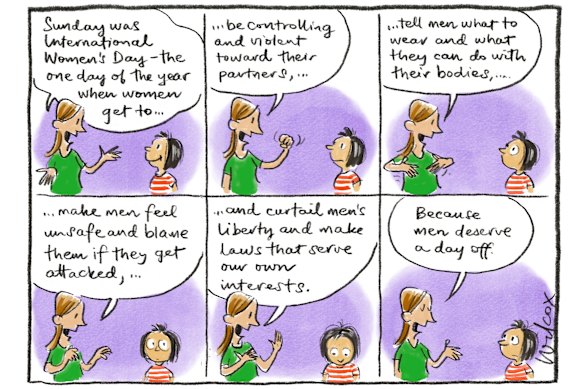
Sean Kelly’s reminder (“We’re losing sight of our humanity”, March 9) is something that must be incessantly said, repeated and discussed. Without humanity, we cease to be the thing that defines us – humans. We are rapidly losing respect for people, and this is translating into a loss of respect for institutions, leaders, experience and, of course, history, science and the rule of law. Unfortunately, this decline is not helped by those in leadership positions, who are themselves caught in the 24-hour news cycle and have sharpened their skills in demonising entire faceless groups. History is reduced to 280 characters, science is condensed into WhatsApp messages, truth is sacrificed on Truth Social, and people fleeing bombs are turned into funny videos. The enemy becomes nameless, places are criminalised and groups are stigmatised.
Amid this barrage of information, killed schoolchildren are categorised as collateral damage, killings are justified because the victims are infidels who pray to the “wrong” god, a woman murdered is labelled a domestic violence statistic, people dead on the roads are folded into the rising road toll, and discrimination against humans is counted as incidents of antisemitism or Islamophobia. These sterile categories erase the human face and what we are left with is a taxonomy of groups. Perhaps good old fashioned empathy, sympathy and genuine feeling need to become fashionable on social media. Manbir Singh Kohli, Pemulwuy
Oh Vienna, your vision is genius
Having watched the affordable housing foot-shuffling begin, I was looking forward to the ways developers would exploit the desire for more and cheaper housing with their own ideas (“Developer upsizing redraws the skyline”, March 9). I have always believed government representatives should have community interests first. How interesting it is to have visited Vienna and been introduced to an original plan by Franz Joseph I in 1857, who brought a medieval city into the future with massive changes in urban planning. This original work culminated in 60,000 residential apartments being built for workers between 1925 and 1934. This was achieved by the Social Democratic Party. The city is a marvel, with facilities, green spaces and affordable rents. My interest was sparked by the Parramatta Road proposal. The NSW government has spent billions on the road system. Spending such amounts may be required to ease our housing crisis. We had a Housing Commission format for this, and it may be time to go back to it. Having seen the success in Vienna, I’m sure this is one fact-finding trip that should be supported by us all. Parramatta Road’s redevelopment could be the start of something wonderful and provide cheaper housing and redevelopment of derelict areas. Robert Mulas, Corlette
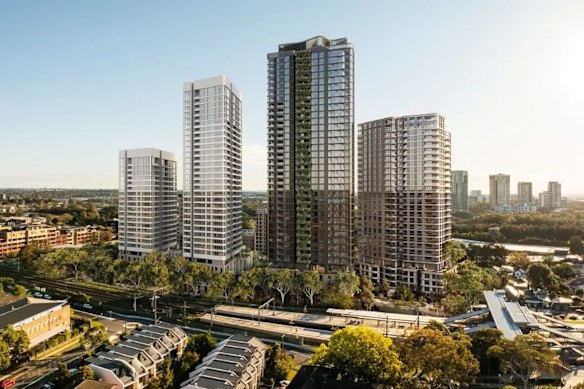
The proposed high rise at Concord station will cause overshadowing and wind turbulence for the surrounding area. Too often the HDA, as well as the Land and Environment Court, appear to be riding roughshod over local communities and councils. The financial viability of building apartments in western Sydney is marginal, and there is a case for high-rises in areas such as Bankstown, Blacktown and Penrith town centres, as well as highways. But the uplift in property values should be ahead of big profits for developers. Tony Simons, Balmain
That the three-person Housing Delivery Authority (HAD) has the power to make decisions on major developments and bypass the views of the local council and community is undemocratic and disturbing. Paul Scully’s statement that “all projects undergo full merit assessment and community consultation” is disingenuous. Certainly, in my local area, there has been no effort to consult residents about what is clearly a highly contentious development that has doubled in scope since first proposed. Alan Morris, Eastlakes
Each time I see a plan for a mega unit development, I look for the recreation space. The sports fields. The parks. The places to feed the ducks and walk in dog poo. The proposals shown in the Herald for Concord West and Campsie neither show nor mention them. Across the road, I have a 10-hectare Crown reserve. Where would the residents of 1300 units go for a walk, a chat or some “me time” after their latest joke went flat? David Neilson, Uralla
Tell it from the Mountains
So the Great Western Highway (a misnomer) has been closed in both directions yet again, until further notice, due to problems at Mitchell’s Causeway (the Convict Bridge). When will the city-centric government of NSW make available the necessary funds for the upgrade to this vital road? This road requires more than token expenditure to provide a reliable and satisfactory route to the west of the state. A tunnel is the only sensible option but the government always baulks at the obvious answer to the obvious problem. Continual road closures and the re-routing of traffic through the centre of Lithgow will not solve the problem. The continuing frustration of those of us living west of the Blue Mountains is building as we see ever-increasing funding for Sydney projects and nothing for a major transport artery. Bruce Clydsdale, Bathurst
Parra power
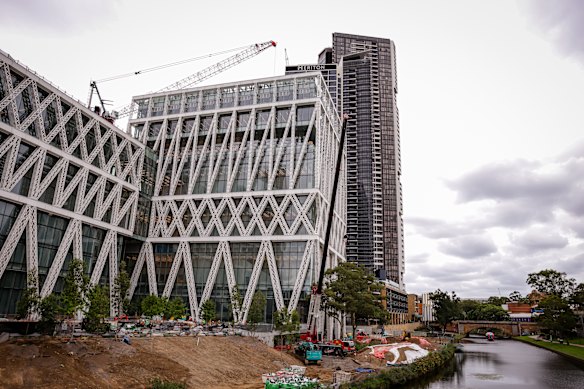
On Saturday, I inspected a new cultural facility being built on the banks of the Parramatta River. The tour was hosted by staff of the Powerhouse Museum and Lendlease, who are constructing the building. Unfortunately, unlike the Powerhouse Museum at Ultimo and the Casula Powerhouse Arts Centre (now Liverpool Powerhouse), this new facility in Parramatta never was, or ever will be, a Powerhouse. The museum needs to be called something else, and I would like to see the Burramattagal clan of the Dharug Nation choosing that name. Having lived on the upper reaches of the Parramatta River for more than 60,000 years, this clan know “where the eels lie down”. We just have to ask our state government to make it happen some time before the ribbon is cut later in 2026. Scott Brandon Smith, Darlinghurst
Move with the mobiles
Oh, how I empathise with your correspondent (Letters, March 9) trying to live life without a mobile phone. I managed to resist until the dark COVID days of 2021 when the government made it a requirement that you were logged into various premises using a mobile phone and QR code. There was no other option. It was giving up beer or buying a mobile. I relented. Just give in – much easier. Ross MacPherson, Seaforth
Your correspondent insults other oldies by suggesting she doesn’t have a mobile phone because she is an oldie. I have friends in their 90s who happily do their banking on their mobile devices. Interestingly, it is usually men who see it as some badge of honour to not use mobile devices – “I don’t use those [expletive] things”; women usually just get on with it, often having to do it for their husbands who just flatly refuse to. Michael McMullan, Avoca Beach
Having a fine opine
It is very pleasing to read regarding letter contributors (Letters, March 9) having the opportunity to meet. I belong to a golf club where some members also have their letters published. We compliment each other for our success whenever we meet up at the club. Peng Ee, Castle Cove
While I note that many letters correspondents are of mature age, it’s also notable that many are retired school teachers. Obviously, teachers like myself welcome the opportunity to continue to have a say, as we have done for years in the classroom. Old habits die hard. Max Redmayne, Drummoyne
- To submit a letter to the Sydney Morning Herald, email letters@smh.com.au. Click here for tips on how to submit letters.
- The Opinion newsletter is a weekly wrap of views that will challenge, champion and inform. Sign up here.
Read the full article here