




The most-important relationship shaping how well people age—according to one elder care expert—is also one that many stop actively investing in by their mid‑20s, according to the researcher whose stark warning has struck a chord among viewers online.
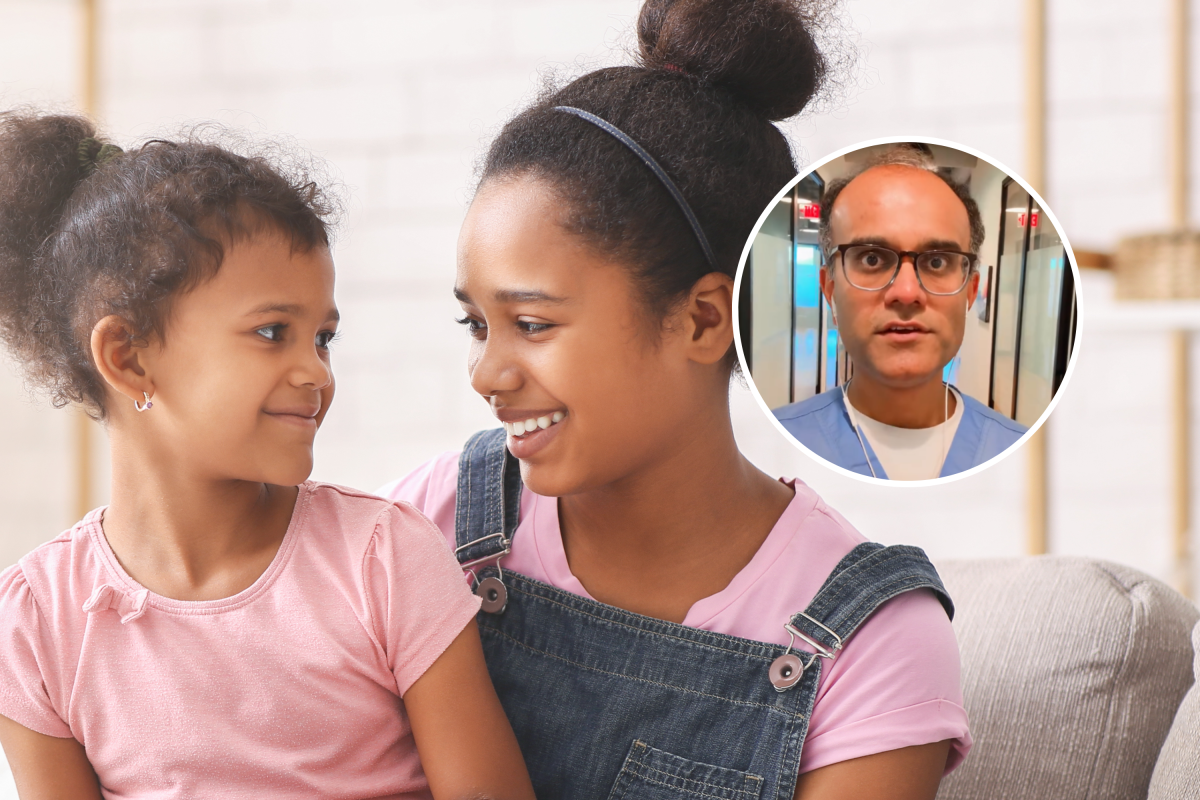
In a viral Instagram video viewed by tens of thousands, Neal K. Shah, a Johns Hopkins‑ and NIH‑funded researcher and the CEO of CareYaya Health Technologies, urges people to rethink the sibling bonds they may have quietly allowed to drift.
“I used to be a $250 million hedge-fund manager in New York City,” Shah told Newsweek. “When, in my 30s, I suddenly went through two major caregiving experiences—dementia care for my grandfather and cancer care for my wife—I left behind my successful career to become a full‑time caregiver.”
Those experiences, Shah said, reshaped his life’s purpose. “Afterwards, I decided to dedicate the rest of my life to supporting caregivers through research, innovation and social entrepreneurship, as I believe that supporting caregivers is one of the biggest unmet needs of our time.”
The video, shared by Shah on Instagram under the handle @nealkshah and liked more than 26,000 times, shows the 43‑year‑old speaking directly into the camera from his workplace. With the urgency of both a researcher and a witness, Shah lays out “three things the research says about siblings that families find out way too late.”
First, he said, “your sibling will know you longer than your spouse, best friend and anyone else alive.”
Second, the quality of that relationship has measurable mental health consequences well into old age. “Sibling conflict and parental favoritism were positively associated with symptoms of depression, anxiety and hostility in older adults,” Shah said, while healthier sibling bonds are linked to lower risk.
The third insight becomes especially relevant later in life: as people divorce, lose spouses or outlive their friends, siblings often re‑emerge as a primary defense against loneliness and isolation.
Shah’s perspective is shaped not only by academic research but also by his daily work running CareYaya, a caregiving platform supporting thousands of senior Americans. He also serves on North Carolina’s Steering Committee on aging.
Loneliness, Shah said, is not a soft problem. He describes it as an epidemic affecting more than 30 percent of Americans over 65, noting that prior public health research has shown self‑reported loneliness in older adults is associated with a higher risk of early death than heavy smoking.
“So, loneliness is literally worse than smoking,” Shah said—and sibling relationships, imperfect as they may be, can be a powerful antidote.
The message resonated widely. But experts caution that sibling ties are not universally protective.
Dr. Jeffrey Gardere, a clinical psychologist and professor at Touro College of Osteopathic Medicine, told Newsweek that positive sibling relationships do indeed support healthy aging by reducing loneliness and buffering stress.
“But I must also point out that a toxic sibling relationship can actually do more harm than good,” Gardere said, which is a point that Shah also elaborated on in his viral clip.
Still, Gardere added that longevity and emotional well‑being hinge on general, healthy social connections, not biology alone. He said that, when sibling relationships are supportive, they can play a distinct role in emotional development.
“That being said, I believe that only children are not at a disadvantage,” Gardere added. “Again, what predicts longevity isn’t just having siblings—it’s a healthy social connection.
“Only children can compensate by often building strong friendships and chosen family networks that provide the same psychological and health benefits.”
As for Shah, he said he hopes that those who do have warm sibling bonds recognize them as a health advantage—and that those with strained or neglected relationships consider whether repair is possible. Even later in life, he added, investing effort can pay dividends.
“My goal,” Shah said, “is to help people live healthier and happier lives as they age.”
Is there a health issue that’s worrying you? Let us know via health@newsweek.com. We can ask experts for advice, and your story could be featured on Newsweek.
Read the full article here