



People will spend $100 to learn about their genetic ancestry. Some pay even more to learn about their dog’s genes. But how many have questioned the genetic ancestry of their steak?
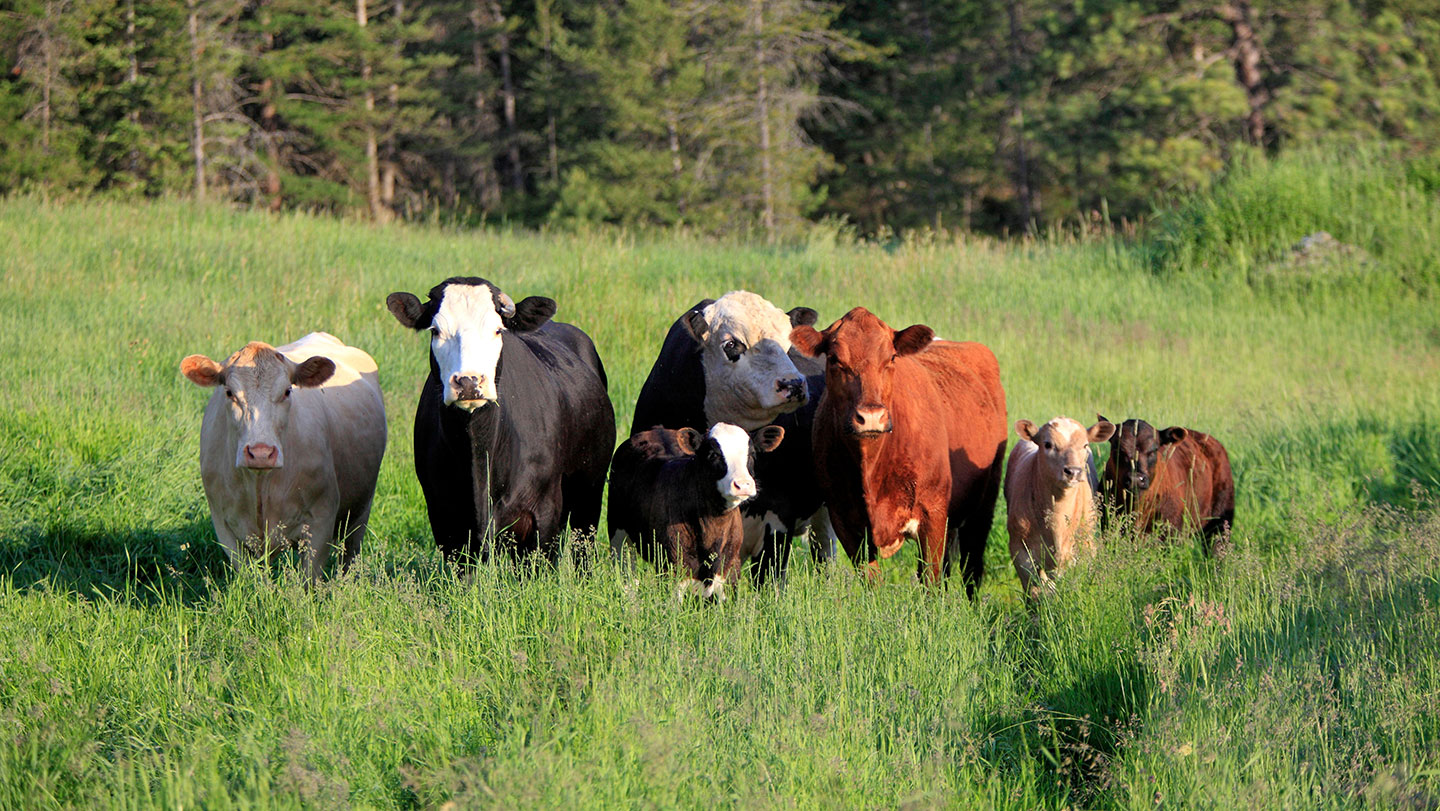
The ancestry of the Beefalo breed is its main selling point. Thanks to DNA from bison, this hybrid breed is said to be hardier and more resistant to disease and to produce more tender, higher protein meat than conventional beef. But an analysis of the breed’s earliest animals turned up little to no bison DNA, researchers report June 10 in eLife.
“It was a surprise to us to discover that most of the Beefalo individuals we sequenced did not have detectable bison ancestry,” says Beth Shapiro, an evolutionary biologist at the University of California, Santa Cruz.
Shapiro and her colleagues study the genomes of species known to produce hybrids, including bison and cattle, and wondered if Beefalo’s bison ancestry had been lost in the 50 years since they were first bred. In the first genome-wide analysis of the breed, her team analyzed preserved semen samples from 47 animals, most collected in the 1970s and ’80s and several from the original Beefalo herd.
Thirty-nine of the animals contained no bison ancestry. The eight Beefalo with any bison DNA still contained less than the breed standard, defined by the American Beefalo Association as three-eighths bison ancestry.
The ABA disputes these results. The association’s president, Dan Stricker, says that all “full-blood” Beefalo in their registry are required to pass DNA tests through labs at the University of California, Davis and at Neogen Genomics in Edmonton, Alberta, that confirm their bison ancestry.
“We have serious concerns that the samples used in Dr. Shapiro’s study do not accurately represent modern, registered Beefalo that have been selectively bred for bison traits over many generations,” Stricker says.
The researchers acknowledge that they sampled few present-day Beefalo, instead choosing to focus on the breed’s founding individuals. But study coauthor Jonas Oppenheimer, an evolutionary biologist now at the Centre for Paleogenetics in Stockholm, says it’s unlikely that present-day individuals contain more bison ancestry than the founders.
The lack of bison ancestry in these Beefalo suggests that, although interbreeding between bison and cattle is possible, it’s biologically difficult. Throughout the 1900s, breeders attempted to establish stable populations of bison-cattle hybrids. All these efforts failed, including, it seems, Beefalo.
While Beefalo may contain little bison ancestry, most wild bison have some amount of cattle genes. Conservationists worry that this mixed ancestry will compromise bison’s unique behaviors, disease resistance and even their legal protections.
But Shapiro and Oppenheimer’s results — and their broader work on cattle-bison hybrids — suggest these concerns may be overblown. “While there clearly has been some gene flow between the two species since cattle were brought to North America,” Shapiro says, “it has been far less frequent and far less consequential than previously believed.”
Read the full article here