

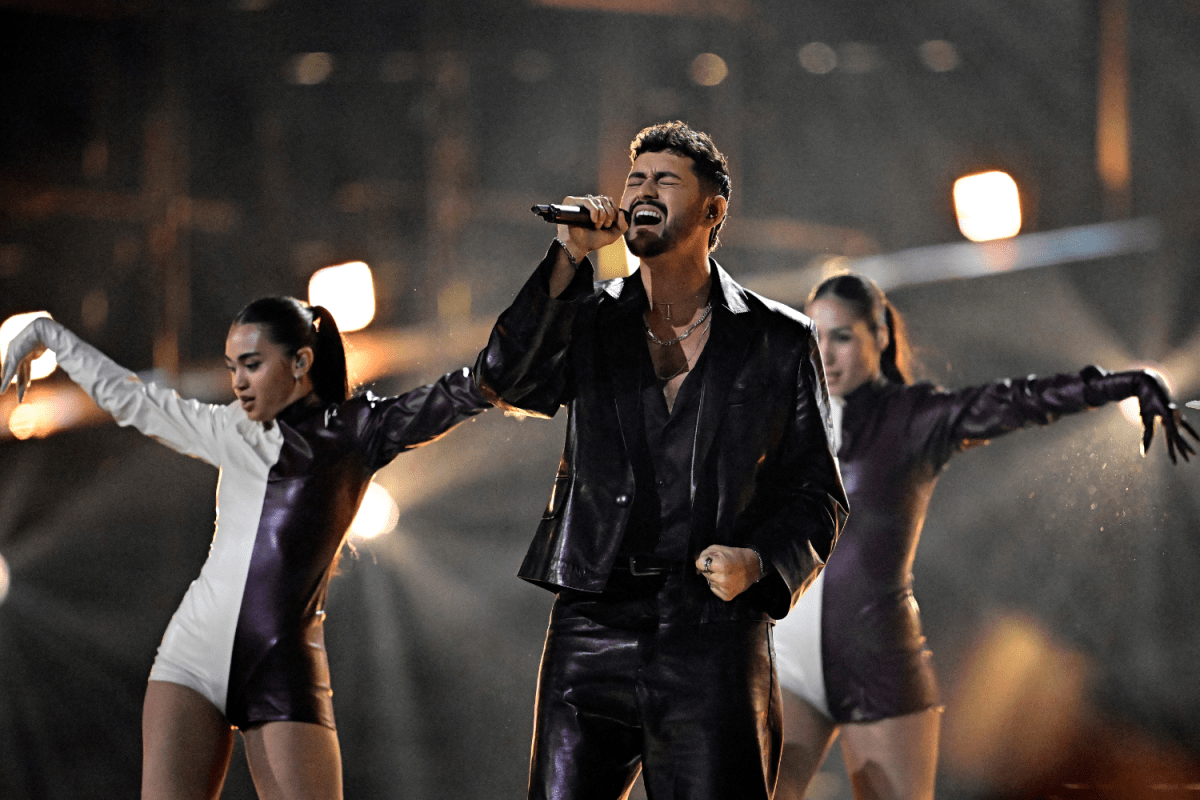
Chants of “stop the genocide” interrupted Israel’s Eurovision semifinal performance on Tuesday night, with the protest audible on the live broadcast and acknowledged by BBC commentators.
The disruption came as Israel competed for a place in Saturday’s Eurovision Grand Final in Vienna, where the contest has become overshadowed by tensions over the war in Gaza and growing backlash over Israel’s participation.
Videos circulating on social media appeared to show audience members chanting during the performance, while separate clips suggested at least four people were removed from the arena by security.
Despite the disruption, Israel’s entry advanced from the semifinal and will now compete in the final on May 16.
Why It Matters
Eurovision, one of the world’s largest live entertainment events, has become a flashpoint over the war in Gaza, exposing growing tension between organizers’ claims of political neutrality and mounting pressure from broadcasters, artists and activists.
Five countries—Ireland, Spain, Slovenia, the Netherlands and Iceland—are boycotting this year’s contest over Israel’s participation, marking an unprecedented rupture for Eurovision in its 70th year.
What Happened During the Eurovision Semifinal
During Israel’s semifinal performance, chants of “stop the genocide” could be heard from the audience.
BBC commentators covering the event acknowledged the disruption on air. Irish presenter Angela Scanlon said: “Some of the audience seem to be giving their opinions on Israel’s continued participation in the song contest.”
Clips shared online after the broadcast appeared to show security escorting several individuals out of the venue following the demonstration. Authorities have not publicly confirmed details of those removals.
The European Broadcasting Union (EBU), which organizes Eurovision, has longstanding rules prohibiting overt political messaging during performances, though enforcement typically focuses on acts rather than audience behavior.
A Contest Under Pressure
Israel’s participation has become the defining controversy of Eurovision 2026, with protests intensifying after more than two years of war in Gaza.
The EBU has defended Israel’s inclusion by citing broadcaster membership rules rather than government actions, though critics have pointed to Russia’s exclusion following the 2022 invasion of Ukraine.
Newsweek has reached out to the EBU via email for comment.
Boycotts and Growing Backlash
Several national broadcasters have withdrawn entirely from the contest after organizers declined to expel Israel.
Officials involved said continued participation conflicted with their public responsibilities given the scale of civilian casualties in Gaza.
Eurovision and ‘Soft Power’
The controversy intensified further after a New York Times investigation published this week reported that Israeli government bodies spent more than $1 million on Eurovision-linked promotional campaigns in recent years and coordinated efforts to encourage public voting.
The report described Eurovision as a “soft power” platform used to bolster Israel’s image during a period of intense international criticism.
What Happens Next
Israel’s qualification for Saturday’s Grand Final ensures the political tensions surrounding this year’s Eurovision are unlikely to fade before the contest ends.
Read the full article here