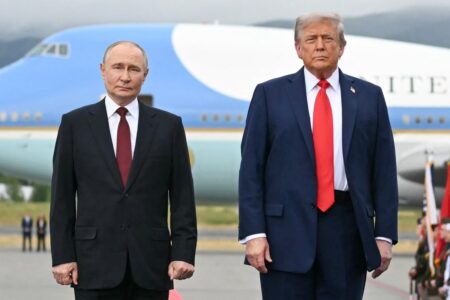




President Donald Trump has proposed suspending the federal gasoline tax of $0.18 per gallon until prices—which have soared by more than 50 percent, or roughly $1.50, since the start of the war in Iran—start coming down.
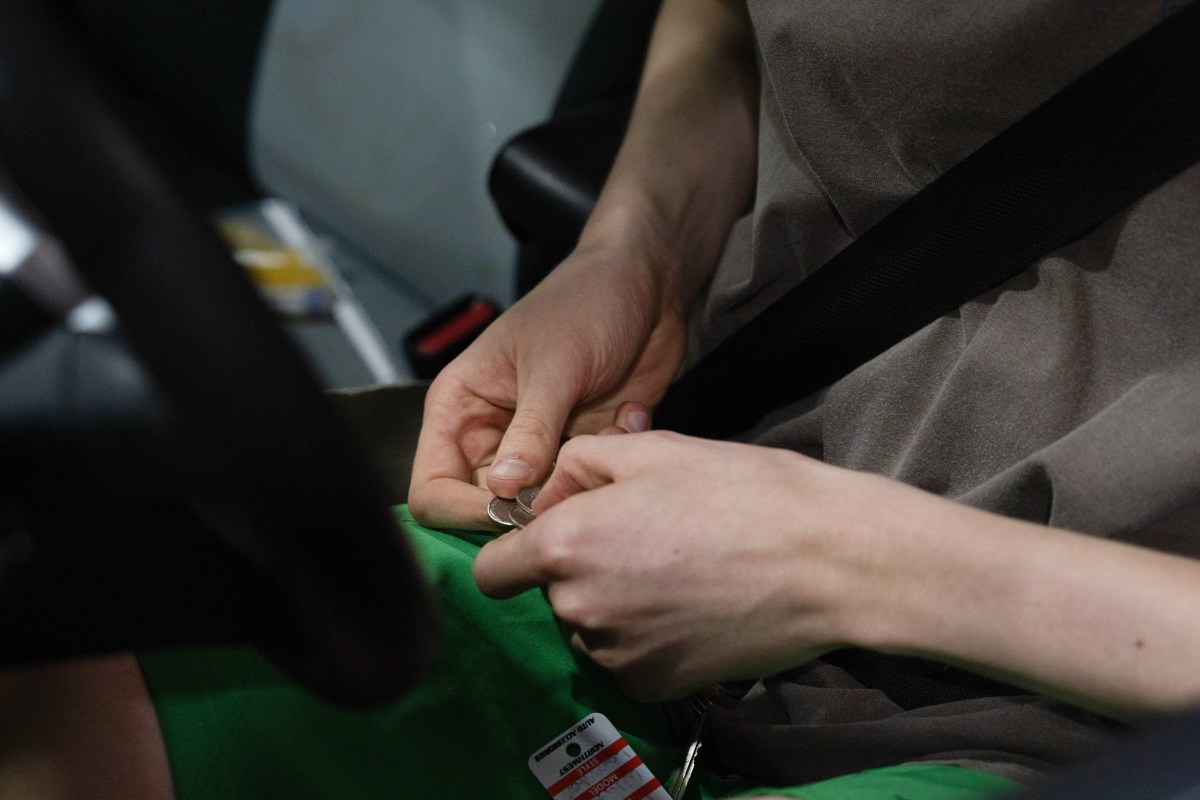
As of May 12, the national average gasoline price was $4.50 per gallon, up from $2.98 on February 26, two days before the U.S. and Israel launched joint strikes on Iran, according to data from the American Automobile Association (AAA). In California, where drivers pay the highest prices in the nation, gas now goes for an average of $6.14 per gallon. In Oklahoma, where they pay the lowest, it goes for $3.94 per gallon.
The measure suggested by the president, which would require congressional approval, could lower costs for drivers significantly, at least if combined with state gas tax holidays or reductions. That is especially true in states such as California and Washington, where overall federal, state and local gas taxes and fees are among the highest in the country.
How Much Does Each State Pay in Gas Taxes and Fees?
Taxes and fees on gasoline across the U.S. range from as little as $0.27 per gallon in Alaska to as much as $0.89 per gallon in California, based on data made available by the U.S. Energy Information Administration (EIA).
The Golden State has the highest overall taxes and fees on gasoline, of which federal taxes account for $0.18. The other $0.72 per gallon is made up of the state excise tax ($0.60), the state sales tax ($0.10) and an underground storage tank fee ($0.02), the EIA reports.
California also has the nation’s highest gasoline excise tax, which is $0.28 per gallon on average across all states.
At $0.85, Illinois has the second-highest federal, state and local taxes and fees on gasoline per gallon, followed by Pennsylvania ($0.77), Washington ($0.77), Indiana ($0.72), Michigan ($0.72) and New Jersey ($0.68).
Drivers in Alaska pay the lowest overall taxes and fees on gasoline, at $0.27 per gallon, followed by Arizona ($0.37), Hawaii ($0.37), New Mexico ($0.37), Oklahoma ($0.38), Texas ($0.38) and Louisiana ($0.39).
Without the federal tax, drivers would be able to save $0.18 cents per gallon, which is not a negligible sum.
However, an analysis by NBC News found that even without the tax, gas prices across the country would still average 35 percent more per gallon than they were before the start of the Iran war.
States Considering Gas Tax ‘Holidays’ and Reductions
Several states—including Georgia, Kentucky, Indiana and Utah—have already implemented suspensions or reductions of their gas tax in response to higher gas prices following the start of the Iran war. In other states, similar actions are gaining bipartisan support.
On March 20, Georgia Governor Brian Kemp signed into law a bill suspending the collection of the state’s $0.33 per gallon excise tax. The gas tax “holiday” is valid until May 19. Georgia was the first state to implement a gas tax suspension.
The Indiana Department of Revenue has not collected the state’s gas use tax since April 8 and is not expected to do so until June 7. The state’s gas excise tax has also been suspended from May 6 to June 7.
Utah introduced a new law temporarily cutting its gas tax by about $0.06 per gallon from July 1 through the end of 2026.
In Kentucky, Governor Andy Beshear lowered the state’s gas tax by $0.10 per gallon beginning on May 11. The move, taken under a state of emergency declared by the Democratic governor, comes with a ban on a roughly $0.02 automatic increase that had been scheduled for July 1.
Can Trump Temporarily Write Off the Federal Gas Tax?
The president first said at a Cabinet meeting in March that he had “thought about” suspending the federal gas tax as prices soared. On Monday, he told CBS News in a phone interview that the measure was “a great idea.”
“We’re going to take off the gas tax for a period of time, and when gas goes down, we’ll let it phase back in,” he said.
He later told reporters on Monday that he intends to suspend it “until it’s appropriate.”
“I’m going to reduce [the federal gas tax] until the—let me tell you, as soon as this is over with Iran, as soon as it’s over, you’re going to see gasoline and oil drop like a rock,” he said, adding, “It’s a small percentage, but it’s still money.”
In an interview with NBC News’ Meet the Press on Sunday, Energy Secretary Chris Wright said, “All measures that can be taken to lower the price at the pump and lower the prices for Americans, this administration is in support of.”
The measure is likely to gather bipartisan support in Congress, where this would be crucial for the suspension’s approval. In March, House Democrats introduced the Gas Prices Relief Act of 2026 to suspend the federal gas tax, but their proposal has not moved forward. Republican Senator Josh Hawley of Missouri introduced a similar proposal on Monday.
Read the full article here